
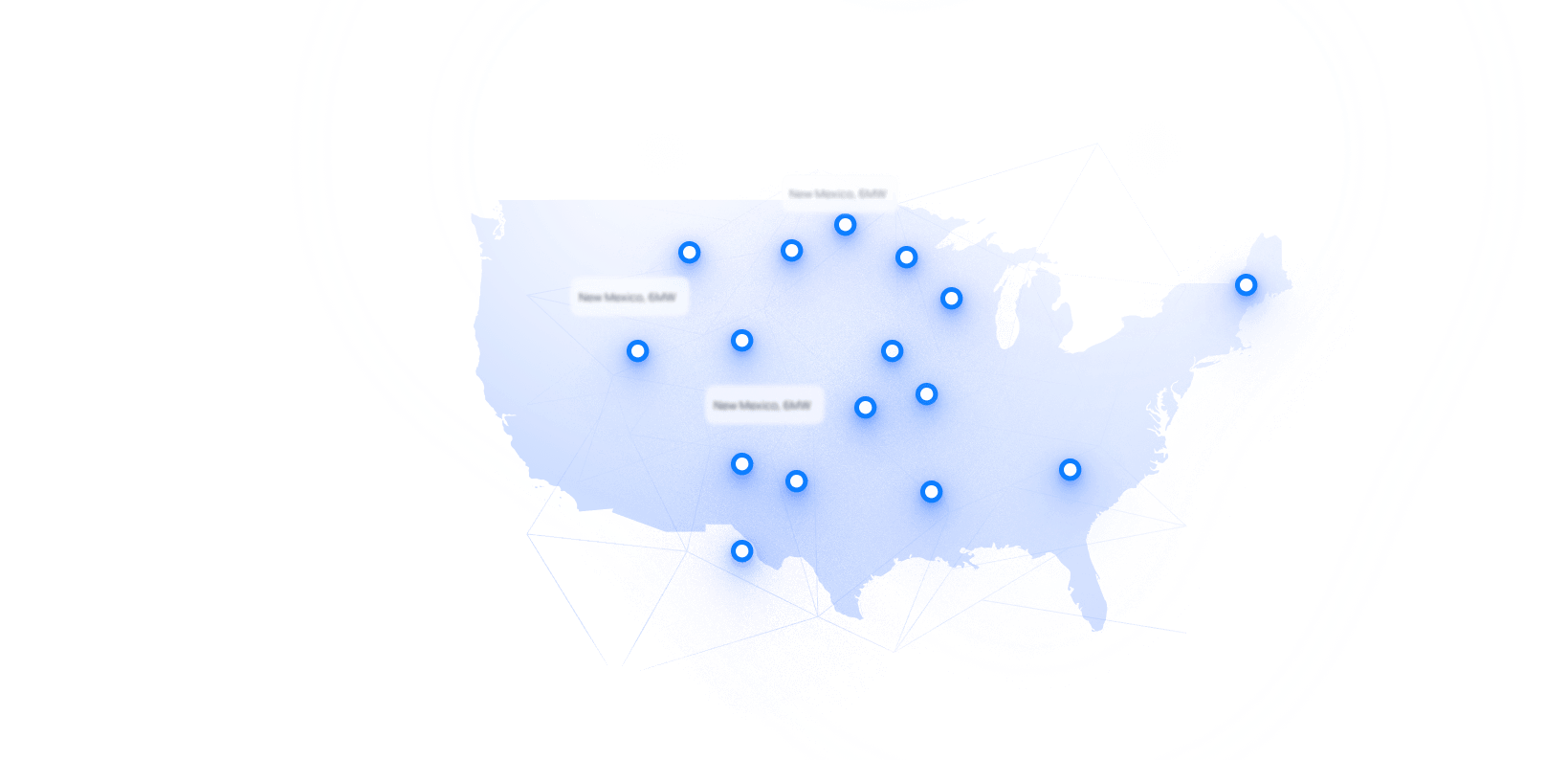
AI & HPC Data Center Land: Best-Fit Power. Real Sites. Fast.

MW-scale AI and HPC deployments need verified power, substation proximity, and sites you control long-term.
Tell us your MW target and we’ll introduce you directly to the right landowners, developers, and operators.

AI & HPC Powered Sites — Active Listings (US & Canada)

Listings are updated regularly. Availability, pricing, and terms change quickly — the most competitive sites often move off-market before they appear here. Use the form below for current status and inventory not listed publicly.

AI/HPC Locations for Sale/LeaseDate ListedPrice Per KWH (usd)Load AvailablePhysical StructureLandPriceNotes
Texas (greenfield grid power) – BUYMarch 20264c15MWBuyer responsible for all site construction2 acres$email usFiber, city water, gas and sewer
Wyoming (greenfield grid power) – BUYMarch 20266c75MWBuyer responsible for all site construction150 acres$email usFiber and city water
Indiana (existing mining facility grid power) – BUYFebruary 20265c12MW8.6k building$3.5m (neg)Near substation, 7MW now, 5MW add. With LOA (no add cost), + gear
Mooresboro, NC (grid power) – BUYMarch 20266c3MWedge container & transformer12 acres$1.25mCurrently running Nvidia H100 & A110, fiber & water access, 12 acres cleared, leveled & certified, data room intel w NDA, 10g fiber
Dallas TX (grid power) – LEASEApril 2026$155/kW1.5MWtier 3 data centerna$155/kWTier 3 data center, 30kW MOQ, Direct Liquid Cooling (DLC), 7 year minimum term
Oregon (greenfield grid power) – BUYJanuary 20267.75c25MWBuyer responsible for all site construction10 acres$3.75m25MW available at 24.9kV, 400’ feet from substation, buyer will own all contracts and rights to purchase the land
Cheyenne, WY (former ATT telecom site-grid power) – LeaseApril 2026$150/kW5MW to 100MW230k building12 acres$750k/month at 5 MW5MW in 90 days, 100MW in 2027, contact for additional cost estimates
New York (power plant) – BUYMay 20265.5c60MWbuilding10 acres$15mCurrently operating as a natural gas power generation/selling back to the grid
Idaho (grid power & natural gas option)May 20265.5c200MW+Buyer responsible for all site construction100 acres$35-$65m95MW on-grid power is immediately available

over 200MW+ of natural gas available on the property, Fiber connectivity is available

Alberta Canada (natural gas) – LEASEMay 2026$140/kW20MWEdge container(s) and gas gen sets supplied by sellerna$140/kWAir-cooled, hybrid, or direct-liquid-cooled (up to 130+ kW/rack). Configured for AI training, inference, HPC, or digital assets
Denver, Colorado (grid power) – LEASEMay 2026$160/kW10MWtier 3 data centerna$140/kW12-24m terms available, 500 tons of cooling available


* All listings reflect current inventory. Most competitive sites often close before public listing. Contact us for off-market options and listings not shown here.

Data Center Land Price Per Acre — 2026 Market Benchmarks

MarketLand Price / Acre (est.)Price Trend (YoY)Notes
Northern Virginia (Loudoun County)$2M – $4M+Up sharplyAmazon paid ~$3.7M/acre for a 189-acre parcel in Nov 2025. Power moratorium limits new supply despite demand.
Silicon Valley, CA$1M – $3M+UpHighest costs in the US outside Northern Virginia. Land scarcity and permitting complexity compress supply.
Phoenix, AZ$200K – $500KUp 40-50% YoYFastest-appreciating secondary market. Low seismic/hurricane risk. Water concerns offset by solar availability.
Dallas / DFW, TX$50K – $150KRising, esp. near substationsMost accessible large-market pricing. Prime parcels near power infrastructure climbing fast.
Atlanta, GA$50K – $200KRisingStill as low as $50K in outer metros. Inner suburbs seeing rapid appreciation as hyperscalers expand.
Columbus / Ohio$150K – $300KUp 3-5x from farmland baseAgricultural land that sold for $10K-$15K/acre now exceeds $150K-$300K rezoned for data center. Google, Amazon, Meta are all expanding here.
Salt Lake City, UT$100K – $300KUp 20-40% YoYSecondary market now seeing hyperscaler attention. Power costs are competitive. Good climate for air cooling.
Reno, NV$100K – $250KUp 20-40% YoYCalifornia relief valve. Switch campus anchors the market. Low taxes, cool climate, growing fiber.
Wyoming / Idaho / Rural West$5K – $50KStable to risingLowest land cost in the US for power-rich greenfield. Power and fiber access, not land price, is the limiting factor.
General powered land (all markets)$200K – $1M+Up significantly from pre-AI eraPowered land (with utility commitment in place) commands a premium in every market over unentitled raw land. This premium is the interconnection work already done.


*Prices are market estimates sourced from publicly available transaction data (2025-2026). Actual pricing varies by parcel size, power availability, zoning status, substation distance, and deal structure. Contact us for current listings with verified pricing.

How It Works

Step 1
Step 1
Share your specs

MW target, max $/kWh, preferred region, buy vs. lease, cooling requirements, and timeline to power-on.

Step 2
Step 2
We source + screen

We work our network of landowners, utilities, developers, and off-market contacts to verify what’s available and live for your load target. Sites where the power delivery timeline is uncertain or the headline $/kWh excludes material costs don’t make your shortlist.

Step 3
Step 3
Get vetted options

Qualified options matched to your MW target and timeline, with direct introductions to the people who can move the deal forward. You compare on real numbers. 

Why Work With Us

  • Access to Off-Market Powered Sites and MW-Scale Land
  • Get Matched with Landowners and Developers Within 48 Hours
  • Trusted by Infrastructure Teams Since 2004

Find Your MW-Scale Site

Tell us your power target and we’ll match you with verified sites from our network, including inventory that never reaches public listings.

    Who This Marketplace Is For

    This marketplace is built for institutional buyers, developers, and funds who think in megawatts. If you’re comparing powered land against a long-term colocation lease, or greenfield against an existing shell, this is where that decision starts.

    Request Custom Quote
    Bob Spiegel, CEO at www.quotecolo.com
    Buyer TypeWhat They’re EvaluatingWhat Matters Most
    AI training operator10-75 MW site over 5-10 year roadmapAll-in $/kWh, available load today (not promised), cooling expandability
    GPU cloud providerPower live within 12 months. Shell preferred over greenfield.Power delivery timeline, DLC capability, fiber, substation distance
    Enterprise consolidating from multiple sitesComparing owned MW-scale site vs. long-term wholesale lease5-10 year TCO, term flexibility, control of physical asset
    PE fund or developerUnderwriting a powered site acquisition before committing capitalOff-market access, data room, credible power delivery date, land price / acre
    HPC / research institutionDedicated compute environment at scale. Budget-driven.Stable $/kWh, compliance posture, long-term term optionality

    What to Evaluate in an MW-Scale Listing


    What’s ListedWhat It Actually MeansWhat to Verify
    Price per kWhHeadline economicsDoes it include transmission and demand charges? All-in $/kWh is often 20-40% higher than quoted.
    Load available (MW)Power being offeredIs this live today, or contingent on a Letter of Authorization that takes months? Ask for the interconnection agreement.
    Substation distanceInterconnection cost proxyCloser isn’t always cheaper. Verify the substation has available capacity and ask about the utility queue.
    Physical structureGreenfield, shell, or conversionGreenfield means full construction. A mining-conversion shell may have live power and existing electrical gear.
    Land / building priceThe asset costSeparate from the power cost. A cheap site with expensive interconnection or remote fiber can cost more all-in.
    “AI-ready”Marketing languageAsk what cooling infrastructure exists vs. what you’d need to build. DLC-ready is not the same as DLC-installed.
    Cooling capacityThermal envelope availablekW of cooling per MW of load. Ask whether liquid cooling manifold infrastructure is in place or planned.

    What Makes Land Data Center-Ready: The Due Diligence Checklist


    Not all acreage near a substation qualifies. Data center developers and institutional buyers evaluate land through a specific technical lens. Understanding these criteria is the difference between a site that closes in 90 days and one that stalls for 18 months.


    Power — the deciding factor

    Proximity to a high-voltage substation with available capacity, a utility interconnection agreement, and the ability to support redundant A+B feeds. Sites with an existing LOA from the utility command a meaningful premium over unentitled land.

    Fiber and connectivity

    Sites near existing long-haul fiber routes or dark fiber save months and cost over running new fiber. Distance from the nearest route determines both timeline and budget.

    Zoning and entitlements

    Pre-entitled land (industrial, tech, or data center zoning) compresses development timelines dramatically. Rezoning agricultural or commercial parcels adds 6-24 months and community approval risk.

    Water and cooling

    Liquid-cooled AI deployments are less water-dependent than traditional air-cooled facilities but still require access for secondary systems. Cooler climates reduce cooling energy costs and water use.

    Climate and natural disaster risk

    Avoid: high seismic zones, flood plains, hurricane corridors, and wildfire terrain. Secondary and tertiary markets in the Midwest and Mountain West generally score well. Cooler ambient temperatures also reduce PUE.

    Topography and access

    Flat land is strongly preferred — hillside grading at data center scale is expensive. Highway access is essential for construction logistics. Plan for 40+ acres for a meaningful facility, 200+ for hyperscale.


    Site FactorIdealRed Flag
    PowerWithin 1 mile of substation with available capacity and LOA from utilitySubstation at capacity or interconnection queue is 24+ months
    FiberOn or adjacent to existing long-haul route or dark fiberNearest fiber route requires new build of 5+ miles
    ZoningPre-entitled: industrial, tech, or data center useAgricultural or residential requiring full rezoning process
    WaterMunicipal water access with adequate pressure and rightsArid region with no water rights secured and no alternative cooling plan
    Seismic riskZone 0-1 (most of Midwest, Southeast, Mountain West)Zone 3-4 (coastal California, Pacific Northwest)
    Flood riskFEMA Zone X (minimal flood hazard)FEMA Zone A or AE (100-year flood plain)
    Acreage40+ acres; 200+ for hyperscale or multi-phase campusUnder 10 acres limits build-out and expansion options


    Buy vs. Lease: Which Path Makes Sense at Your Scale


    Buy or lease powered land or shells

    You acquire the site and control the asset long-term. Greenfield requires full construction and permitting (12-36 months to power-on). Conversion shells with live power compress that to 60-90 days. This path makes sense when your load forecast is firm, your horizon is 5+ years, and asset ownership improves your long-term TCO.

    Lease a wholesale colocation suite (1-5 MW)

    You lease dedicated space inside an existing facility. The operator handles power, cooling, and security. No construction, no real estate exposure. Power-on in weeks to a few months. Right path when you need to deploy within 12 months without managing a build.

    See wholesale colocation pricing and provider options

    What’s Actually Happening at MW Scale in 2026

    Power, not land, is the scarce resource

    Before: Finding a large site meant finding land.

    Now: Land is available almost everywhere. What’s scarce is a substation with spare capacity and a utility that can commit to a delivery date. Powered land with a utility LOA in place commands a meaningful premium over raw land in every market.

    Existing structures beat greenfield on timeline

    Before: Greenfield was the default path for large deployments.

    Now: Mining-conversion facilities and powered shells fill faster because the interconnection work is already done. In Atlanta, average grid connection lead time for a 50 MW deployment has stretched to multiple years. Existing structures sidestep that queue entirely.

    Community and permitting risk is increasing

    Before: Site approval was mostly a technical and regulatory process.

    Now: Twenty-five data center projects were canceled in 2025 due to local opposition—four times the number the year before. Shovel-ready, pre-entitled sites with community engagement already completed command a significant premium over raw land that has not cleared those hurdles.

    Off-market inventory is where the better terms live

    Before: Searching the market meant finding most of what was available.

    Now: The sites with room to negotiate on $/kWh or land terms are the ones that never went to public listing. Our network includes inventory that doesn’t appear in a standard search.

    The biggest competitive advantage in 2026 isn’t finding land—it’s finding available power, avoiding permitting delays, and accessing opportunities before they reach the public market.

    Case studies

    Helped 750+ companies in 20+ years

    From startups colocating their first servers to companies deploying multi-rack, high-density GPU and AI colocation infrastructure, businesses trust QuoteColo to find the right data center faster.

    See how we helped teams secure colocation with the right power, pricing, and providers.

    Frequently Asked Questions

    We’re happy to answer any other questions you have. Here are answers to some common questions:

    Does working with QuoteColo cost more than going directly to a landowner or operator?

    No. The price is exactly the same as going direct. Landowners and operators work with us from their existing sales budget, the same way they would fund an in-house sales representative. You pay nothing extra. In return, you get direct introductions to qualified parties with verified availability, including off-market inventory you would not reach through a standard search.

    What’s the minimum MW target to use this marketplace?

    Most listings start at 1–3 MW of available load. Below that threshold, our GPU colocation and single-rack AI colocation pages are a better starting point. For 1–5 MW deployments, leased wholesale suites may also be faster and more cost-effective than land acquisition.

    How current are the listings?

    The table is updated regularly, but the most competitive sites often move before they appear publicly. When you submit your requirements, we check current availability across our full network, including off-market opportunities, and tell you what’s actually available for your target load and deployment timeline.

    What’s the difference between a greenfield site and a mining-conversion shell?

    A greenfield site is undeveloped land with a grid connection where you are responsible for the full construction process. A mining-conversion shell already has live power, an existing structure, and often reusable electrical infrastructure. These facilities typically reach power-on much faster because the interconnection agreement and much of the electrical build are already complete.

    What does $/kWh actually include in these listings?

    It varies by listing. Some quotes reflect only the raw generation or utility rate, while others include transmission, demand charges, and additional delivery costs. The true all-in $/kWh can often be 20–40% higher than the headline figure, so it’s important to confirm exactly what’s included before comparing sites.

    How is land priced for data center development differently from other commercial real estate?

    Data center land is valued primarily by available power capacity rather than square footage or traditional location comparables. For example, a 100-acre parcel next to a powered substation in Wyoming may be more valuable than 10 acres in a prime commercial location without grid capacity. Sites with available power and a utility Letter of Authorization already in place command a premium because the interconnection process—often the longest and most expensive part of development—has already been completed.

    X