The AI Colocation Provider Market:
What You’re Actually Choosing Between

“AI-ready” is marketing. We verify power, cooling, and minimums across 500+ providers and send you the ones that actually qualify.
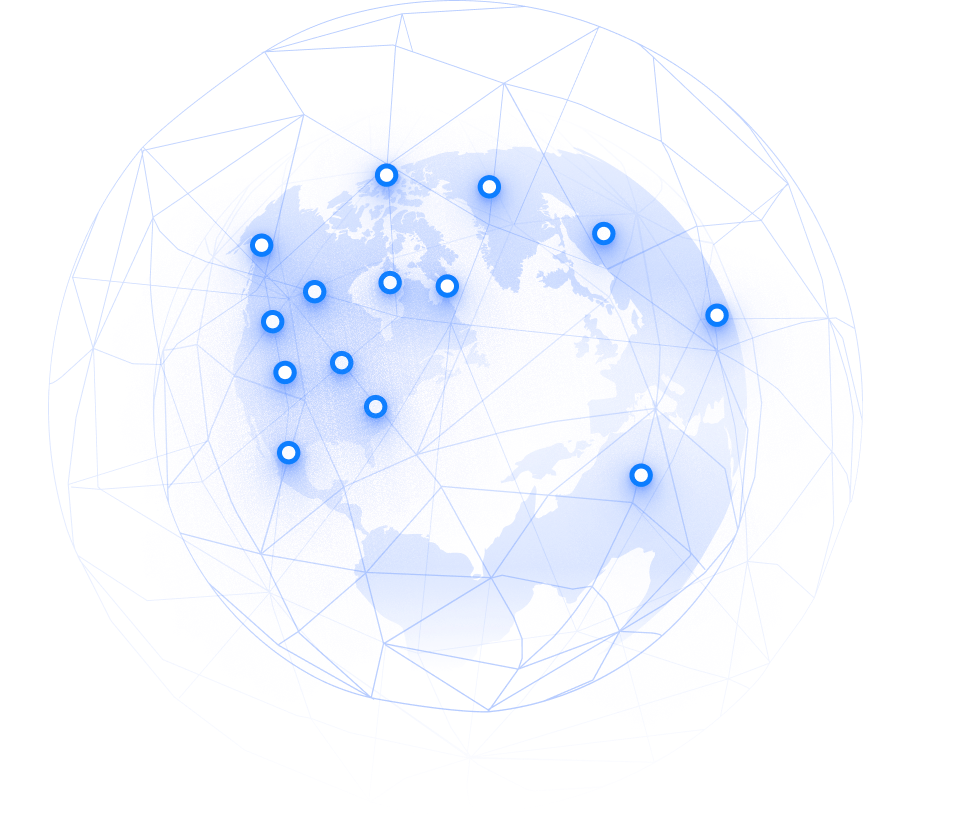
data center providers in network
avg annual savings
companies matched since 2004
AI infrastructure in 2026
1Tier 1: Hyperscale-Adjacent Operators
(Equinix, Digital Realty, Iron Mountain, QTS, CyrusOne, DataBank)
Built for scale. Carrier density is unmatched. Compliance certifications are current. AI-ready marketing is pervasive.
The reality: Minimum commitments of 100kW–1MW are standard in primary markets. Power queues in Ashburn and Santa Clara stretch 6–18 months for new deployments. If you’re deploying 20+ racks at scale and can wait, these are credible options. If you need 2–8 racks of GPU infrastructure in the next 60–90 days, Tier 1 operators in primary markets will rarely be your answer.
Best for: Multi-MW AI training clusters, large enterprise inference deployments, teams with 12+ month procurement timelines.
2Tier 2: Mid-Market Regional Operators
(Flexential, Evoque, Vantage, Aligned, Novva, Cologix, regional Tier III certified facilities)
The sweet spot for most AI teams deploying 2–20 racks. These operators want your business: a 5–10 rack AI deployment is a meaningful contract for them, not an afterthought. Power availability is often better than primary markets. Pricing is typically 20–35% below Tier 1 rates.
The catch: They don’t advertise this. You won’t find them through standard searches. Real availability data requires a direct relationship or a broker who already knows their current inventory.
Best for: Series A–C AI startups, enterprise AI teams with 2–20 rack requirements, teams prioritizing deployment speed and $/kW over brand name.
3Tier 3: Specialty and Power-First Operators
(Hydro-powered Pacific Northwest facilities, Texas energy-advantaged operators, Midwest wholesale-adjacent sites, purpose-built AI infrastructure hosts)
Purpose-built or repositioned for power-dense AI workloads. Sub-$150/kW in some markets. Liquid cooling infrastructure designed from the start rather than retrofitted. Willing to take 1–5 rack deployments with shorter terms.
The catch: Location choices are limited by where cheap, reliable power exists. These operators are almost entirely invisible online: no published pricing and often no public website. They fill capacity through brokers and word of mouth.
Best for: AI training workloads where $/kW is the primary decision driver, teams willing to choose secondary markets for cost advantage.
4Tier 4: Managed AI Infrastructure Providers
(Providers offering bare-metal GPU rental, managed AI infrastructure, or “colo-adjacent” GPU cloud services)
Not traditional colocation. You don’t bring your own hardware. But for teams that haven’t yet purchased servers and are evaluating buy vs. rent, these are relevant comparison points. Monthly pricing for H100 nodes from managed providers typically runs $6,000–$12,000+/node/month. Useful for spiky workloads, expensive for steady inference.
Best for: Pre-hardware AI teams evaluating total infrastructure strategy; short-term capacity bridges while building owned infrastructure.
Ask for committed kW (what you pay for), allocated kW (what’s on your breaker), and available kW (what they can provision within your timeline) separately. In constrained markets, “allocated” can mean 6 months from now.
Air containment generally supports up to ~25kW per rack. RDHx up to ~40kW. Dense H100/B200 clusters usually require direct liquid cooling or immersion above that. “Liquid-ready” often means floor prep only — not an installed CDU manifold. Get the exact cooling infrastructure type in writing.
Verify dual-feed power and UPS runtime at your power draw level, not the facility’s rated maximum.
Ask directly: minimum kW accepted, minimum term, and what expansion from 3 racks to 10 looks like contractually. This is where most AI teams get rejected before the conversation even starts.
“24/7 remote hands” means very little without specifics. GPU infrastructure requires skilled technicians. Ask for hourly rates, response SLAs, and whether NVIDIA-certified staff are available on-site. This line item alone often adds $300–$500/month nobody budgets for.
| Provider Type | Typical Footprint | Power Minimum | Cooling | Deploy Time | $/kW Range | Right For |
| Tier 1 Hyperscale-Adjacent | 20+ racks | 100kW–1MW+ | Air + liquid options | 3–18 months | $180–$350/kW | Large enterprise, multi-MW AI |
| Tier 2 Mid-Market Regional | 2–20 racks | 10–50kW | Air + containment; some liquid | 4–10 weeks | $130–$250/kW | Startups, enterprise AI teams |
| Tier 3 Specialty / Power-First | 1–10 racks | 5–30kW | Often liquid-designed | 3–8 weeks | $100–$180/kW | Training workloads, cost-driven |
| Tier 4 Managed / Bare-Metal | Per-node | None | Managed by provider | 24–72 hours | $6–12k/node/mo | Pre-hardware teams, short-term |
Actual quotes depend on market, timing, and your specific requirements. Send us your specs and we’ll give you real numbers.
AI Inference Colocation
Low latency to your user base: location over raw power cost
Carrier neutrality and direct cloud on-ramps for hybrid setups
10–20kW per rack, standard air cooling
99.99% uptime SLA: downtime is customer-facing
Scalable footprint as your user base grows
AI Training Colocation
30–80kW per rack, liquid cooling required
High-bandwidth node interconnect (InfiniBand, RoCE, or 100G+ Ethernet)
$/kWh is a primary cost variable at scale
Location matters less — training doesn’t need low user latency
Workload can checkpoint and resume
Fine-tuning / batch inference: 15–30kW per rack, air or containment cooling, moderate network. Tier 2 regional operators are usually the best fit.
| AI Team Profile | Their Situation | What We Deliver |
| AI startup, 1–3 racks, own hardware | Bought H100s. Got rejected by Equinix (100kW min). Needs a home for a 15–30kW rack without a multi-year enterprise contract. | Mid-tier and regional providers who accept 1–3 rack AI deployments with 12-month terms and liquid-cooling ready infrastructure. |
| Enterprise ML team, 5–20 racks | Moving AI inference off cloud. Needs a carrier-neutral facility with cloud on-ramps, predictable MRC, and room to grow. | Shortlist of Tier 1 and Tier 2 options with normalized cost comparison: power model, bandwidth, cross-connects, term escalators. |
| AI training operation, power-first | Running large training jobs. Cost-per-kWh is the decision driver. Willing to go to secondary markets for sub-$120/kW. | Power-advantaged Tier 3 providers in TX, WA, Pacific NW, Midwest — most not findable through search or ChatGPT. |
| Series B–C AI company, scaling fast | Started with 2 racks, needs to plan for 20 in 18 months. Doesn’t want to migrate facilities mid-growth. | Providers with documented expansion capacity and growth-path contract terms. No facilities that will be outgrown before the team does. |
| Enterprise IT, regulated AI workload | AI inference for a healthcare or fintech application. Needs SOC 2 Type II + HIPAA + physical security alongside AI-ready infrastructure. | Compliance-certified providers with verified current attestations (not 2022 PDFs) that also support the required power density. |

Share your specific needs (e.g., power, location, etc.).


Multiple qualified providers will connect with you directly. You decide on which option is best for organization. There is no obligation.

Free qualified quotes in your inbox within hours vs weeks. No sales calls until you’re ready.















In Ashburn, Santa Clara, and Dallas, facilities have cabinets, they don’t always have power available on your timeline. A 6-month queue for a 20-rack deployment is common. We verify power availability before any provider makes your shortlist.

Tier 2 and Tier 3 providers who want your 2–10 rack deployment, offer 12-month terms, and have capacity right now are almost entirely invisible online. They fill space through broker relationships, not SEO. That’s the inventory direct search misses and QuoteColo accesses.
Since 2024 it’s the default claim regardless of actual capability. What it requires: liquid cooling infrastructure installed (not just floor prep), A+B power at your actual rack density, and minimums that match your footprint. We confirm all three before shortlisting.
Dallas, Phoenix, Salt Lake City, Columbus, Atlanta, and the Pacific Northwest are absorbing deployments that primary markets can’t place in reasonable timelines. For training and batch inference, the latency tradeoff is irrelevant. The cost and timeline advantage is not.
Four things matter:
1) verified power delivery at the density your GPUs require, available within your deployment timeline;
2) cooling infrastructure that genuinely supports your kW per rack — air for ~25kW, containment/RDHx to ~40kW, DLC or immersion above that;
3) A+B dual-feed redundancy;
4) minimum commitments that actually fit your footprint size.
A real AI-ready facility supports all four. A GPU landing page alone means nothing.
Tier 1 operators like Equinix and Digital Realty often require 100kW+ minimums in primary markets. Providers willing to support 1–5 rack AI deployments are usually Tier 2 regional operators or Tier 3 specialty sites.
Most do not publish pricing or live availability publicly. The fastest path is typically through a broker with active provider relationships and current inventory visibility.
Functionally they overlap, but the framing matters. “GPU colocation” focuses on the hardware itself — H100s, A100s, L40S clusters hosted in a data center.
“AI colocation” refers to the full infrastructure stack required for AI workloads: power density, distributed networking, cooling, compliance, scalability, and deployment planning.
Deployment timelines depend heavily on market conditions and cooling requirements.
Air-cooled inference in secondary markets like Dallas, Phoenix, or Salt Lake City often deploys in 3–6 weeks. Primary markets like Ashburn or Santa Clara commonly require 6–16 weeks because of power queues.
Liquid cooling deployments can add another 4–8 weeks for CDU manifold installation and commissioning.
For steady, always-on workloads — usually yes, significantly.
An H100 node running continuously on AWS P5 or GCP A3 can cost roughly $270K–$340K annually. Buying the hardware and colocating it often reaches break-even in 6–12 months and becomes materially cheaper in years 2–3.
Cloud still makes sense for bursty or short-term workloads where flexibility matters more than long-term economics.
The questions that matter most:
1) What is the usable kW per rack?
2) What cooling infrastructure is actually installed?
3) Is power available now or queued?
4) What are the minimum kW and contract commitments?
5) What does the remote hands rate card look like for GPU-specific work?
6) Is liquid cooling operational or only “liquid-ready”?
7) Can the deployment scale from 3 racks to 15 without moving facilities?
In 2026, Dallas/North Texas, Phoenix, Salt Lake City, Columbus, Atlanta, and parts of the Pacific Northwest currently offer the best mix of power availability and realistic deployment timelines.
Ashburn and Santa Clara still offer stronger carrier density, but sub-100kW deployments often struggle with long queues and aggressive minimum commitments.
All-in monthly recurring cost (power + space + basic network) generally ranges from $2,500–$8,000/month per rack for 10–20kW deployments in secondary markets, and $4,000–$15,000/month in primary markets.
For AI workloads, the $/kW model is usually more useful:
• Secondary markets: roughly $100–$180/kW
• Primary markets: roughly $180–$350/kW
Our primary focus is the US and Canada, where we maintain the deepest provider relationships and market visibility.
We also support selected international markets for clients expanding beyond North America. Share your target region and deployment goals, and we’ll tell you directly what coverage is realistic.
