
Maintenance without downtime
With two paths, the facility can service a UPS, a generator or a PDU on one side while the other carries your cabinet. On a single feed, that maintenance means a window with your equipment off.
Dual feeds, usable kW, dual-corded servers
A+B power means your cabinet gets two independent power feeds, each with its own UPS and distribution path, so a failure or maintenance on one side doesn’t take your servers down. It only works if each feed can carry the whole rack on its own and your servers have two power supplies. A 30A, 208V circuit gives about 5.0 kW of usable power after the 80% rule, so a 5 kW rack needs two of them, not one split in half.
Updated November 2026 · Bob Spiegel, Founder, QuoteColo

“Tell me what you’re deploying; I’ll come back with real options from a network built over 20 years.”
— Bob Spiegel, Founder, QuoteColo
In this guide
From our desk, November 2026
From Bob’s signed deals and quotes (customers and providers withheld). Prices are per month.
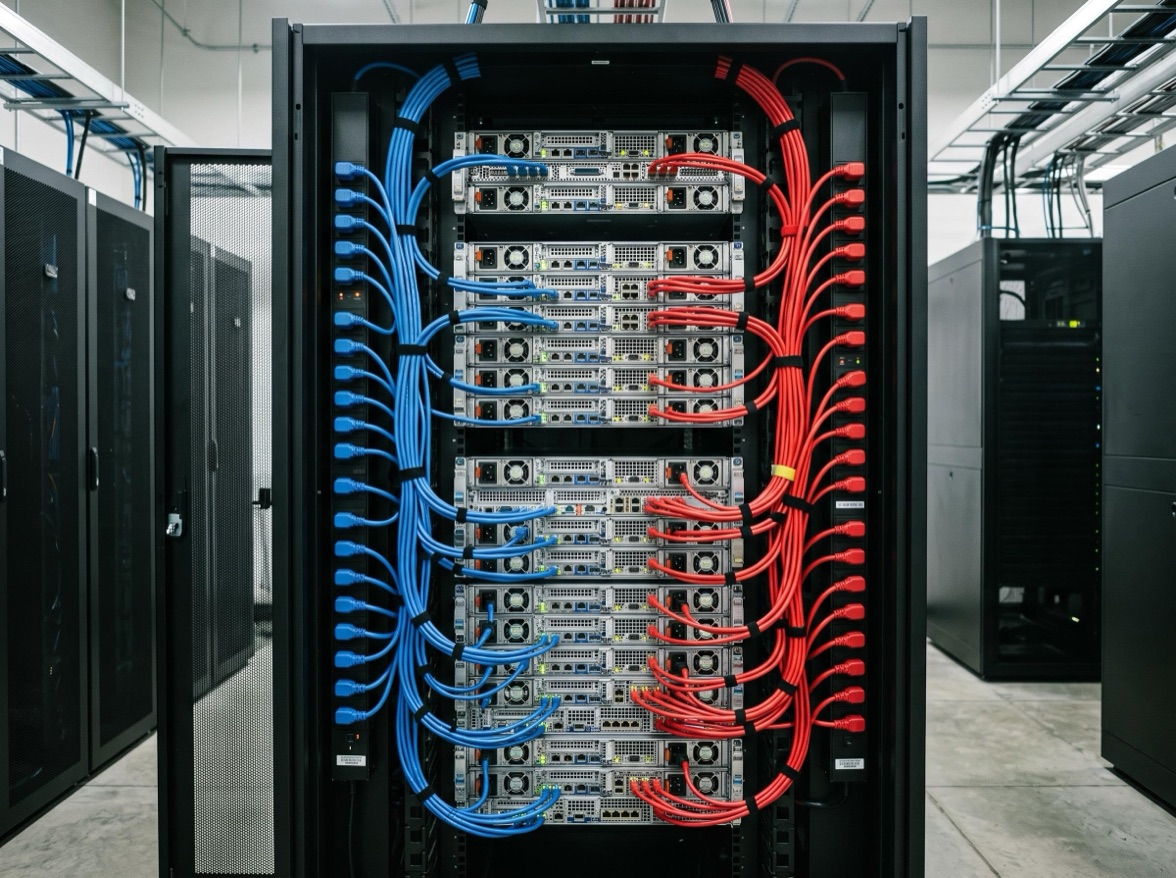
Your cabinet gets two separate feeds, A and B, that come from independent parts of the facility’s power chain. Not two outlets on one PDU, and not two PDUs from one panel. Two paths that don’t share a component that can fail.
Power caused 45% of the impactful data center outages Uptime Institute counted in 2025. A+B is the part of the power design that lets maintenance and single failures happen without your servers noticing.
Share of power-related outages each part was involved in; one outage can involve more than one. Uptime Institute Annual Outage Analysis 2026 (May 2026).
With two paths, the facility can service a UPS, a generator or a PDU on one side while the other carries your cabinet. On a single feed, that maintenance means a window with your equipment off.
A breaker trips at 2 a.m. With dual-corded servers on A and B, the B side carries the load while the A side is fixed. Your monitoring shows a power event; your servers stay up.
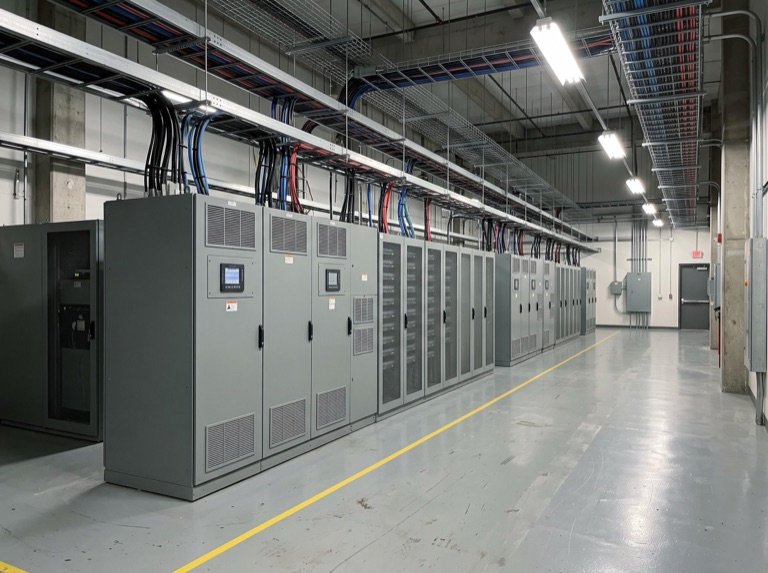
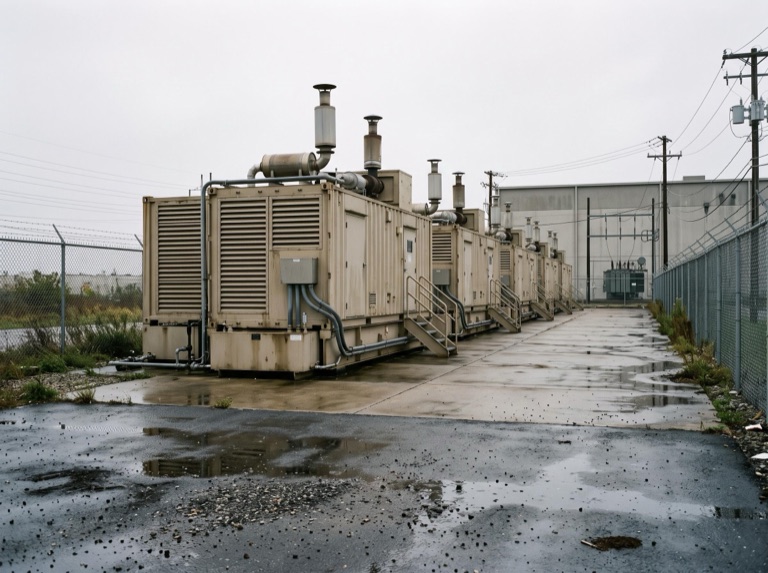
Facilities have several generators. What matters is whether your A and B feeds draw on different ones, so a single generator fault can’t take out both.
Want these numbers for your own deployment? and we’ll reply with the providers that fit, with their prices.
A “30A circuit” doesn’t give you 30 amps. Servers run around the clock, which the National Electrical Code treats as a continuous load, so a circuit can only be loaded to 80% of its breaker rating. A 30A breaker gives you 24A.
Volts × amps × 0.8, and × 1.73 for three-phase. That’s apparent power (kVA); modern server power supplies run close to a power factor of 1, so kW is nearly the same. Ask the facility for usable kW per circuit in writing, not the breaker size.
With A+B, each feed must carry your whole rack if the other one fails. Two 30A, 208V circuits give you about 5.0 kW of redundant power, not 10.0 kW. If you load both to 4 kW each, losing one feed puts 8 kW on a circuit built for 5.0, and its breaker trips.
So a rack that draws 8 kW needs each feed sized for 8 kW: a 30A, 208V three-phase circuit (about 8.6 kW usable) on each side. That’s how the Texas deal on our desk was built: two 17 kW cabinets, each on A/B 60A, 208V three-phase circuits, about 17.3 kW usable per feed.
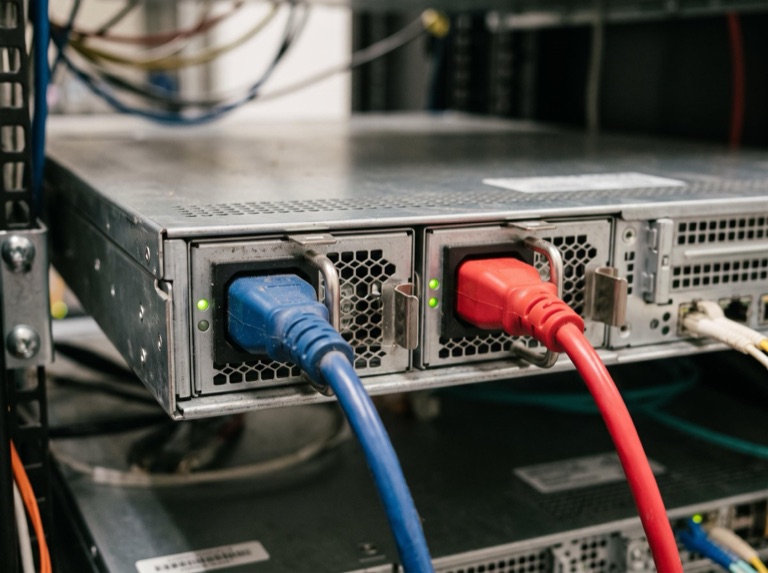
A+B at the facility is useless to a server with one power supply. It can only plug into one feed, and when that feed fails, the server goes down whatever the B feed is doing.
The four rack sizes on our November 2026 price sheet, with the circuit each feed usually needs to carry the whole rack.
In an A+B cabinet you have two PDUs, one per feed. Their type decides what you can see and do remotely.
Ask “do you have A+B power?” and almost every facility says yes. The question that matters is whether independent A and B feeds reach your cabinet.
What it means
The building has independent A and B utility feeds, UPS systems and generators.
Watch for
Distribution to some rows may come from one side only, common in older halls and legacy power designs.
What it means
Your cabinet gets one circuit from the A side and one from the B side, independent all the way back to separate UPS systems and generators.
Why it matters
It’s what concurrent maintainability means for your servers, not just for the building.
Ask
Are the A and B feeds to my cabinet from independent UPS systems and generators? Can I see the one-line diagram for that row?
Put in the contract
“Independent A and B feeds to Customer’s cabinet, each from a separate UPS and generator path,” not “redundant power.”
Three systems stand between a utility outage and your servers. Each needs its own answer for the A and the B side.
What it does
Carries the load from the moment the utility drops until the generators take over, and filters sags and spikes.
Ask
Is it N+1 on each side? How many minutes of battery at the current load (about five is typical), and lead-acid or lithium-ion?
What it does
An automatic transfer switch starts the move to generator power within seconds of a utility failure; the UPS covers those seconds.
Ask
Does each side have its own transfer switch, and when were they last tested under load?
What it does
Runs the building until utility power is back, which can be days.
Ask
How many hours of fuel are on site (Uptime’s Tier standard requires at least 12), and what does the refueling contract guarantee? “We have generators” doesn’t answer it.
A+B costs more because the facility reserves power and builds paths twice. For most production workloads it’s worth it; for some it isn’t.
Facilities price A+B differently: some include it in the cabinet price, some charge per circuit, and some bill the kW you reserve on both feeds. These are A/B deals and quotes from our own desk, with what each price includes.
We don’t take “A+B power available” at face value. When you need A+B, these are the questions we put to each provider.
Almost every quote has the checkbox. What it means varies by facility, and the difference only shows during a failure.
Some facilities run independent A and B paths to every cabinet. Others give you two PDUs from the same panel, which protects you from a PDU failure and nothing else.
Two 30A circuits look like 10 kW. With redundancy, they give you 5 kW: each feed has to carry the whole rack if the other drops.
A shared UPS or generator behind both feeds stays invisible until it fails. By then you’re three years into the contract.
Send your requirements once.
We match them against prices and specs we already hold from 500+ providers.
You get the providers that fit, with prices, and call the ones you pick.
You never pay us. Providers cover it.
You send the specs. We find the options. You decide.

Tell us what you're deploying, where you want it, and when you need it. Send the specs you have; we'll help with the rest.
Estimates are fine. No perfect RFP needed.
We filter our network of 500+ providers down to a few that fit, then email you their names and estimated all-in pricing for your requirements.
 Provider names & matched optionsEstimated total, with inclusions & extrasAvailability & key terms

Like the options? Contact the providers directly. Need more detail? Call or email us. We're here to help, not push you.
 Go directly to the providers you like
 Ask us questions whenever you need
Your price is the same as going direct.
Review the options before deciding on a call.
5,000+ clients helped.

See how we helped teams secure colocation with the right power, pricing, and providers.
Prices, checklists and market notes from the same desk.
Clients helped since 2004
to Buyers
Worldwide providers
in 48 h
A+B power means your cabinet receives two independent power feeds. The A feed and the B feed each have their own UPS, distribution path and generator backing, so a failure or maintenance on one side doesn’t interrupt the other. It only protects servers with two power supplies, one plugged into each feed, and only if each feed can carry the whole rack on its own.
Usable power is volts × amps × 0.8, because the electrical code limits continuous loads such as servers to 80% of the breaker rating. A 30A, 208V circuit gives about 5.0 kW; a 30A, 208V three-phase circuit about 8.6 kW; a 60A, 208V three-phase circuit about 17.3 kW. Ask the facility for usable kW per circuit in writing, not the breaker size.
Yes. A server with one power supply can only plug into one feed, so it goes down when that feed fails. Most enterprise 1U and 2U servers ship with two hot-swap supplies; plug one into the A PDU and one into the B PDU. GPU servers differ: NVIDIA’s DGX B300 runs at full power on one feed, while a DGX B200 keeps running with its GPUs slowed. Check before you size the circuits.
Facility-level A+B means the building has independent A and B utility feeds, UPS systems and generators. Cabinet-level A+B means your specific cabinet gets one circuit from each side, independent all the way back. A facility can have the first without the second for some rows, so ask about your cabinet, not the building.
Ask whether the A and B feeds to your cabinet come from independent UPS systems and generators, whether each feed is sized for your full rack load, and which PDUs come with the cabinet. Ask for the one-line diagram for your row if your team wants to check the design, and write “independent A and B feeds to Customer’s cabinet” into the contract.
N+1 means one more UPS module or generator than the load needs, so one can fail without losing capacity. 2N means two complete, independent systems, each able to carry the whole load. In Uptime Institute’s Tiers, Tier III is concurrently maintainable and Tier IV fault tolerant; both assume dual-corded equipment on A and B. Most business workloads are well served by Tier III with A+B to the cabinet.
Usually, but facilities price it differently: some include it in the cabinet price, some charge per circuit, and some bill the capacity reserved on both feeds. On our desk, a Texas deal for two 17 kW cabinets on A/B 60A, 208V three-phase circuits was signed in September 2026 at $8,170 a month for space and power, $240 per kW. Ask how A+B is billed before comparing quotes.
Sometimes. If a B path already reaches your cabinet, it takes a second circuit and PDU and re-cabling every server’s second power supply, usually as a scheduled remote-hands job. If your row is fed from one side only, a real B path may need facility work that isn’t possible where you are. It’s far easier to put A+B in the first quote.
We ask each provider whether independent A and B feeds reach the cabinet type you need, whether they come from separate UPS systems and generators, and whether each feed is sized for your full load. The answers go into the notes we send with your options, so you know what was confirmed before the quote.
No. You don’t pay us. Providers share their existing standard sales commission with QuoteColo, so there’s no added fee or markup on your provider quote.


