
The AOC is the evidence.
There’s no PCI “certificate”. A service provider validates compliance each year, and its Attestation of Compliance states the version, the date and the services in scope.
AOC, CDE scope, Requirement 9
For PCI DSS, a colocation facility in your cardholder data environment should show a current Attestation of Compliance (AOC) as a service provider, assessed by a QSA against PCI DSS v4.0.1, with the physical controls of Requirement 9 in scope. “PCI compliant” on a website isn’t evidence. PCI DSS doesn’t change the rack price: a 5 kW full rack is $1,500–1,800 a month across our 26 markets (November 2026).
Updated November 2026 · Bob Spiegel, Founder, QuoteColo

“Tell me what you’re deploying; I’ll come back with real options from a network built over 20 years.”
— Bob Spiegel, Founder, QuoteColo
In this guide
From our desk, November 2026
From the PCI Security Standards Council’s PCI DSS v4.0.1; prices from Bob’s November 2026 City Price Sheet, per month. Not a compliance opinion.
PCI DSS doesn’t make the facility responsible for your whole compliance posture. It requires the facility to meet the controls that touch the physical and network layer of your cardholder data environment (CDE).
The most consequential decision isn’t the provider. It’s where you draw the boundary of your CDE, and your cage and network choices move that boundary.
Want these numbers for your own deployment? and we’ll reply with the providers that fit, with their prices.
Three acronyms decide whether a facility’s compliance claim is evidence.
There’s no PCI “certificate”. A service provider validates compliance each year, and its Attestation of Compliance states the version, the date and the services in scope.
A Qualified Security Assessor (QSA) can assess other companies. An Internal Security Assessor can only assess their own employer, so an ISA can’t produce a service provider AOC you can rely on.
Smaller service providers can validate with SAQ D. Large ones, about 300,000 card transactions a year or more for Visa and Mastercard, need an on-site QSA assessment; most large operators validate that way.
Visa’s Global Registry of Service Providers is public and lists providers registered by a client bank and revalidated yearly. Many colocation providers aren’t on it; ask for the AOC either way.
PCI DSS v4.0 was published in March 2022 and replaced by v4.0.1 in 2024; requirements that were future-dated became mandatory on 31 March 2025.
What changed
Since 31 March 2025, multi-factor authentication covers all non-console access into the CDE (8.4.2), not only administrators (8.4.1) and remote access (8.4.3).
For colocation
Mostly yours, for your systems. Ask whether any facility staff access into your CDE exists, and if so whether it uses MFA.
What changed
Where the standard lets an entity set how often something happens, it must justify the frequency with a documented targeted risk analysis (12.3.1).
For colocation
Ask whether the facility has documented these for the controls it runs, such as review frequencies.
What changed
An entity can meet a requirement’s objective with its own control, validated by a QSA, instead of the defined control. It can’t be used with a self-assessment questionnaire.
For colocation
If a facility’s AOC mentions it, ask which requirements and how the assessor tested them.
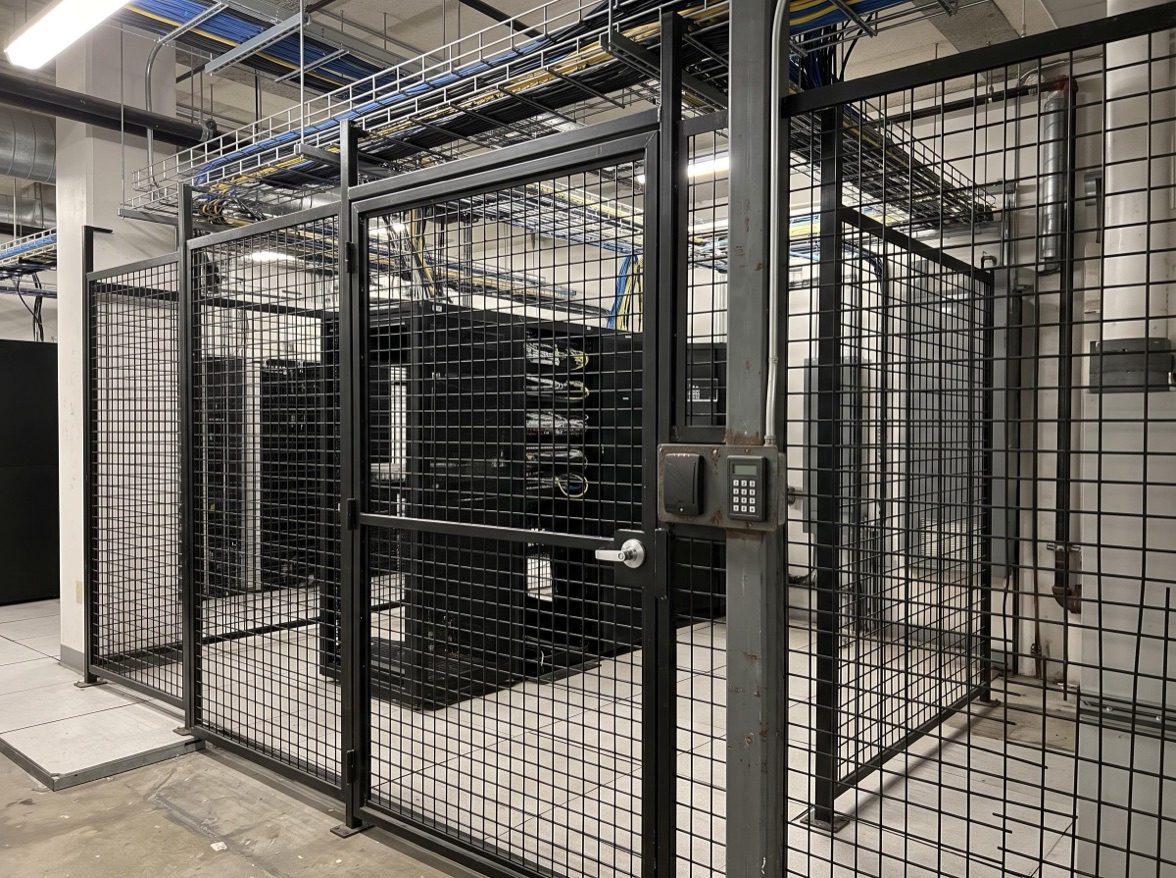
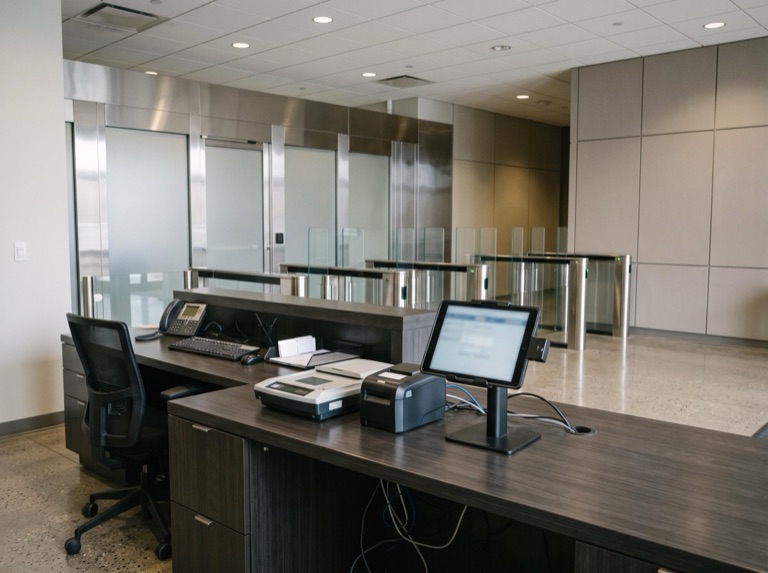
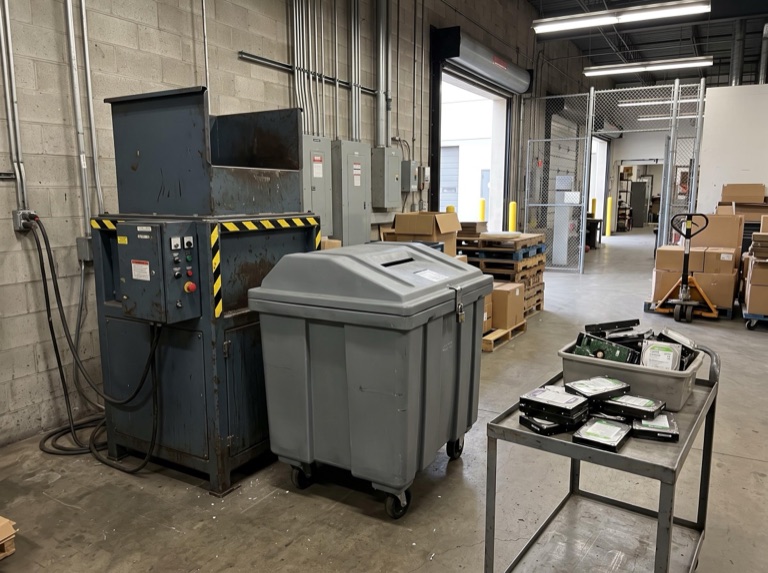
Requirement 9, restricting physical access to cardholder data, is the part your assessor checks at the facility. Ask for documents, not assurances.
Who asks us for PCI DSS colocation, and what their options include.
“We support PCI environments” and “we hold a current AOC” are very different statements.
Every result claims it. Only an AOC shows the facility was assessed as a service provider.
It may cover space and power but not remote hands or the network the facility manages for you.
An AOC against v3.2.1 is out of date: v4.0.1 is the current standard.
Send your requirements once.
We match them against prices and specs we already hold from 500+ providers.
You get the providers that fit, with prices, and call the ones you pick.
You never pay us. Providers cover it.
You send the specs. We find the options. You decide.

Tell us what you're deploying, where you want it, and when you need it. Send the specs you have; we'll help with the rest.
Estimates are fine. No perfect RFP needed.
We filter our network of 500+ providers down to a few that fit, then email you their names and estimated all-in pricing for your requirements.
 Provider names & matched optionsEstimated total, with inclusions & extrasAvailability & key terms

Like the options? Contact the providers directly. Need more detail? Call or email us. We're here to help, not push you.
 Go directly to the providers you like
 Ask us questions whenever you need
Your price is the same as going direct.
Review the options before deciding on a call.
5,000+ clients helped.

See how we helped teams secure colocation with the right power, pricing, and providers.
Prices, checklists and market notes from the same desk.
Clients helped since 2004
to Buyers
Worldwide providers
in 48 h
A current Attestation of Compliance (AOC) as a service provider, after a QSA assessment against PCI DSS v4.0.1, covering the services you use: at least the physical facility and Requirement 9, plus any network equipment or managed service in your CDE. Also a responsibility matrix showing which requirements are the facility’s, yours or shared.
“Supports PCI environments” is a statement about the building. A current AOC is evidence that the facility’s own controls were assessed for the services it provides. Your assessor will ask for the AOC, not the web page, so get it before you shortlist.
Neither is mandated. PCI DSS requires physical access to your CDE to be restricted, documented and auditable. A shared cabinet with network isolation and access records can work; a private cage makes the boundary and the access list cleaner, which most assessors prefer. Quarter and half cages give that at a smaller footprint.
The current version is v4.0.1, published in June 2024; v4.0 was retired at the end of 2024 and v3.2.1 in March 2024. The requirements that were future-dated became mandatory on 31 March 2025. An AOC against an older version is out of date, so check which version the facility’s AOC states.
Segmentation is how you keep systems out of scope. If in-scope systems connect to others through shared network equipment, scope spreads to them. At the colocation layer, confirm in writing which network components the facility manages, how your traffic is isolated, and who documents and tests the boundary.
A Qualified Security Assessor works for a firm certified by the PCI Security Standards Council to assess other companies; a QSA assessment produces an AOC others can rely on. An Internal Security Assessor can only assess their own employer. For a facility’s compliance, ask who performed the assessment.
Not on its own. There’s no PCI DSS certificate: compliance is validated each year, and the AOC is the proof. Ask for the AOC, check its version and date, read the services in scope, and ask for the responsibility matrix. A Visa registry listing helps, but many colocation providers aren’t listed.
Yes. Your assessor asks for the AOC of every service provider in your CDE, and it covers the facility’s share of the responsibilities. It doesn’t cover yours: system hardening, application security and access management on your systems still need your own assessment.
Yes. Large operators often want bigger commitments and long terms; mid-tier and regional providers with current AOCs take 2–8 racks in private cages. You get matched options by email within 48 hours once the requirements are clear, with the AOC status and scope for each.
No. You don’t pay us. Providers share their existing standard sales commission with QuoteColo, so there’s no added fee or markup on your provider quote.


